A website becomes authoritative when it consistently proves it deserves trust. That proof comes from useful expertise, clear site structure, accurate information, and pages that help visitors solve real problems faster than competing pages.
For early-stage businesses, the fastest path is not publishing dozens of disconnected blog posts or chasing questionable links. To improve website authority, we need to build a focused library around the problems customers already bring to us, then make every important page easier to understand, navigate, and validate.
Google’s own guidance is refreshingly direct: ask, “Is this content that my visitors would find satisfying?” That question is a strong filter for every service page, product page, article, and FAQ we publish. Google Search Central
What Website Authority Actually Means
Website authority is the confidence people, search engines, and AI answer tools develop in a site’s knowledge and reliability within a specific subject area. It is earned through consistent evidence, not granted by a single metric or a quick backlink campaign.
Authority has several connected parts. A local roofing company can become trusted for roof repair, storm damage, and material comparisons. A SaaS company can become trusted for the workflow it improves. An ecommerce store can become trusted by publishing useful buying guidance, product details, original reviews, and clear policies.
| Authority Signal | What It Shows | Early-Stage Priority |
|---|---|---|
| Focused topic coverage | We understand a category deeply | High |
| First-hand expertise | We have real experience | High |
| Clear site structure | Visitors can find answers | High |
| Relevant external validation | Others trust our work | Medium |
| Consistent updates | Information stays reliable | Medium |
Google advises creators to focus on original, useful, people-first material rather than pages made primarily to manipulate rankings. It also emphasizes that unique experience and a clear point of view help content stand apart from generic summaries. Google Search Central
Start With One Topic You Can Own
A focused subject area builds credibility faster than broad content that tries to attract everyone. Early-stage businesses should choose one commercially relevant topic where they have real experience, customer insight, or a differentiated process.
For example, a dental practice should not try to become an authority on all health topics. It can build a strong, helpful content library around family dentistry, cosmetic treatments, dental anxiety, or emergency care. A property management company can focus on owner retention, tenant screening, maintenance coordination, and rental pricing.
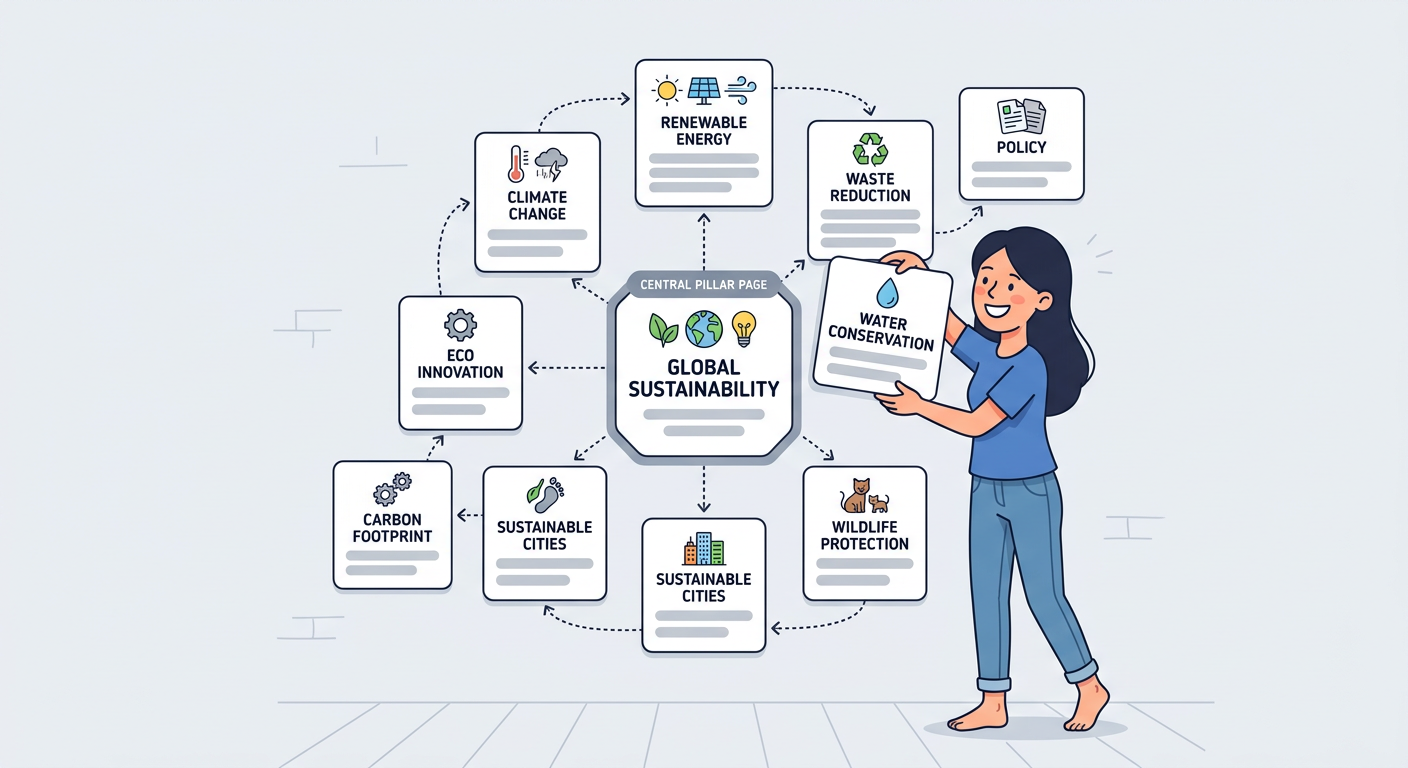
This is the foundation of topical authority. Our related guide on building topical authority with pillar pages and content clusters explains how a central page and supporting articles make the relationships between topics clearer for both readers and crawlers.
Choose the Topic With Revenue Behind It
We should start where trust has the most direct business value. Look at the services, products, or use cases that create the best customers, highest retention, or strongest margins.
Ask these questions:
- Which customer problem do we solve better than most competitors?
- What questions come up on sales calls, support tickets, or consultations?
- Which category needs more explanation before someone is ready to buy?
- Where do customers hesitate because the process feels confusing or risky?
A financial advisor may build content around retirement planning for business owners. A salon software company may focus on reducing no-shows. A home-services contractor may focus on repair-versus-replace decisions. Those are specific problems with clear commercial relevance.
Build a 90-Day Authority System, Not a Random Blog
The most reliable early-stage content strategy is progressive: establish the foundation first, deepen the topic next, then strengthen proof and distribution. This creates a credible body of work without exhausting a small team or producing low-value pages.
Days 1 to 30: Fix the Pages That Make Promises
Start with the pages closest to conversion. Improve your homepage, core service pages, product pages, About page, pricing or booking page, and contact page before adding a large volume of new articles.
Each page should answer five practical questions quickly:
- What do we offer?
- Who is it for?
- What problem does it solve?
- Why should someone trust us?
- What should they do next?
Add concrete proof wherever possible. Use qualifications, certifications, case outcomes, location details, founder experience, original images, product specifications, customer reviews, policies, and named team members. A vague claim such as “trusted experts” is weak. A clear statement such as “our licensed technicians have completed more than 600 residential inspections” gives visitors something tangible to evaluate.
Days 31 to 60: Publish the Core Content Cluster
Next, create one pillar page that explains the main topic at a useful depth. Then publish four to six supporting pages that answer narrower questions customers ask before and after the purchase.
A practical cluster for an ecommerce skincare brand might include:
- A pillar page on choosing a routine for sensitive skin
- A guide to ingredient compatibility
- A page on patch testing products
- A comparison of cleansers for dry skin
- A routine for seasonal irritation
- A transparent explanation of shipping, returns, and subscriptions
Every supporting page should link naturally to the pillar page and at least one relevant commercial page. That structure helps customers continue their research instead of leaving after one answer. It also avoids the common mistake of having excellent pages that remain isolated from the rest of the site.
Days 61 to 90: Add Proof, Refresh Gaps, and Earn Attention
The third month is where a promising content library starts to look established. Review your highest-value pages and add examples, original observations, comparison tables, diagrams, expert input, and answers to objections that surfaced in sales or support.
Then identify external opportunities that are genuinely useful: supplier partnerships, professional association profiles, local business listings, expert interviews, community sponsorships, industry podcasts, and original data worth sharing. We should pursue relevance and credibility, not volume.
Google specifically warns against inauthentic mentions and emphasizes foundational SEO, valuable content, crawlable pages, and technical clarity instead. Google Search Central
Make Every Important Page Easy to Trust
Trust is often won or lost in small details. Visitors notice outdated dates, anonymous advice, vague pricing, awkward navigation, missing policies, and unsupported claims long before they describe those issues as “authority problems.”
Show Who Is Behind the Information
Add bylines and author pages for educational content, especially for healthcare, legal, financial, and other high-consideration industries. Explain the author’s experience, credentials, and role in reviewing the material.
For a medical practice, that may mean clinician-reviewed content with clear medical credentials. For a SaaS business, it could mean that the product lead writes from hands-on implementation experience. For a restaurant, it may mean chef-led stories about sourcing, preparation, and menu decisions.
Improve Technical Clarity Before Chasing Advanced Tactics
Authority cannot help a page that customers or crawlers struggle to access. Check that key pages load reliably, have descriptive titles, use logical headings, include useful internal links, work on mobile devices, and are not blocked from indexing.
Google explains that technical eligibility, crawlability, and clear site structure remain foundational for visibility in its generative search experiences as well as standard results. Google Search Central
Avoid treating special files or gimmicks as a shortcut. Strong content, understandable information architecture, and a clean user experience create a more durable advantage.
Use Internal Links With Intent
Internal links should guide visitors to the next useful answer, not simply scatter keywords across the page. A service page can link to a pricing explanation, a relevant case study, and a guide that helps a customer evaluate options.
If we are also building visibility in AI answer tools, clear structure matters even more. Our article on how generative engine optimization supports clear, trustworthy content covers how answer-ready formatting, semantic context, and well-connected pages support both traditional SEO and AI discovery.
Measure Authority With Business Signals, Not a Single Score
No third-party authority score can tell us whether customers trust our business or whether our content is improving qualified demand. Use those scores as directional diagnostics if helpful, but keep the operating dashboard closer to customer behavior.
Track these indicators monthly:
- Organic clicks and impressions for your core topic pages
- Rankings for high-intent commercial and educational queries
- Leads, bookings, trials, purchases, or calls from organic traffic
- Engagement on key pages, including scroll depth and assisted conversions
- New referring domains from relevant publications and organizations
- Branded searches and direct traffic trends
- Visibility when people ask AI tools about your category, use case, or brand
For AI discovery, do not assume that a traditional ranking report tells the full story. Review prompts customers may use to compare solutions, find local providers, or understand a problem. Our guide to earning more AI mentions through clear, credible pages outlines how to monitor gaps in brand clarity, topic coverage, and answer-friendly content.
Common Authority Mistakes That Slow Growth
Most authority problems are not caused by a lack of effort. They come from investing effort in work that does not create lasting evidence of expertise or trust.
Publishing Broad Content Outside Your Lane
A law firm that publishes generic lifestyle articles, or a software company that writes unrelated news commentary, may create traffic without creating a clear reason to trust the business. Keep the content connected to the questions your best customers need answered.
Treating AI Content as a Publishing Machine
AI can speed up research, drafting, outlining, and editing. It cannot supply your customer conversations, proprietary process, outcomes, product knowledge, or professional judgment. Use it to support expert work, then add what competitors cannot easily replicate.
Hiding the Conversion Path
An excellent article that has no relevant next step wastes earned attention. Add useful calls to action based on intent: request an estimate, compare plans, view inventory, schedule a consultation, download a checklist, or read the next guide.
Waiting for Backlinks Before Improving the Site
Links can reinforce authority, but they work best when they point to pages worth recommending. Improve the experience, proof, and content depth first. Then promotion becomes much easier because you have something genuinely useful to share.
See What Will Strengthen Your Site First
A clear audit helps us avoid spending a quarter polishing low-impact pages while critical gaps remain. Marvlus offers a free AI website audit, topical mapping, SEO and rank tracking, plus monitoring for mentions across ChatGPT, Gemini, and Claude, so we can prioritize the pages and topics most likely to improve visibility.
Start with the pages closest to revenue, build the next cluster around a topic you can credibly own, and measure progress every month. That is how we turn a website from a digital brochure into a dependable growth asset.
Authority Comes From Evidence, Not Volume
To improve website authority, we do not need to look bigger than we are. We need to be clearer, more useful, more specific, and more consistent than the alternatives customers find.
A focused 90-day system creates momentum because every improvement reinforces the next one: stronger core pages make content more credible, connected content makes expertise easier to recognize, and real-world proof gives people a reason to choose us. Build the evidence patiently, and the site will become more valuable to readers, search engines, and AI answer tools alike.
Frequently Asked Questions
How long does it take to improve website authority?
Most businesses should expect early improvements within a few months, not a few days. Technical fixes and stronger conversion pages can produce faster gains, while topical coverage and external recognition typically compound over a longer period.
Do backlinks still matter for website authority?
Yes, relevant backlinks still matter because they can validate that other organizations find your content or business worth recommending. Quality and relevance matter more than large quantities of low-value links.
Can a new website build authority without a large marketing budget?
Yes. New sites can build momentum by choosing a narrow topic, improving high-intent pages, documenting real expertise, and publishing useful answers to customer questions. Consistency and specificity often outperform expensive but unfocused campaigns.
Should we delete old blog posts that do not perform?
Not automatically. First, determine whether a page can be updated, consolidated with a similar page, redirected, or repositioned around a more useful intent. Delete only when the page has no meaningful value, no viable improvement path, and no reason to remain available.
Does a Google Business Profile help local authority?
Yes. For businesses with a physical service area, an accurate profile, consistent contact information, customer reviews, current hours, and well-maintained local pages help customers evaluate legitimacy and relevance.
Is topical authority more important than domain authority?
For most early-stage businesses, topical depth is more actionable because we can control it directly through content, internal links, and expertise. Broader domain-level strength can grow over time as the site earns recognition and relevant links.