A ranking report can look reassuring while telling us almost nothing useful. Seeing a keyword move from position 18 to 12 matters only when we know which page improved, whether the term brings qualified visitors, and what action we should take next.
This rank tracking software comparison focuses on that practical question: which platform gives an early-stage website enough clarity to make better SEO decisions without paying for enterprise complexity? We compare the tools by tracking depth, workflow fit, cost, local visibility, and their ability to connect rankings to business outcomes.
For most growing sites, the right choice is not the platform with the biggest keyword database. It is the one that helps us monitor a focused set of revenue-driving terms, identify pages close to page one, and turn weekly data into specific improvements.
Rank Tracking Tools at a Glance
The best tool depends on the job we need it to do. Broad SEO suites fit teams that need research, audits, and competitor analysis together, while focused platforms can be better for simpler reporting or high-volume tracking.
| Tool | Best Fit | Tracking Strength | Starting Price | Watch Out For |
|---|---|---|---|---|
| Marvlus | Growing website owners | Page-to-keyword workflow | Free options | Newer platform |
| Semrush | Full-service SEO teams | Daily rankings and AI visibility | $199 monthly | Higher cost |
| Ahrefs | Research-led SEO teams | Competitor and backlink context | $29 monthly starter | Weekly updates on core plans |
| SE Ranking | Agencies and multi-site teams | Daily tracking and reporting | $129 monthly | More setup required |
| Google Search Console | Every site owner | Actual Google performance data | Free | Not a traditional tracker |
What a Useful Rank Tracker Must Show Us
A useful rank tracker does more than record a position. It should connect a query, a landing page, a location or device, competitors, and a trend line that helps us decide what to fix.
Page-Level Keyword Mapping
The most valuable question is not, “What keywords do we rank for?” It is, “Which page should rank for this keyword, and is it improving?”
That distinction prevents a common early-stage mistake: publishing multiple pages that compete for the same phrase. A mapped workflow lets us see that the service page is stuck at position 14 while an older blog post is at position 29, then consolidate intent, strengthen internal links, or refresh the better page.
Marvlus keyword tracking is built around this page-to-keyword view, showing rankings alongside search volume, clicks, and page scores. That is a strong fit when we want a short, actionable priority list instead of a long export.
Accurate Context for Local and Mobile Results
A plumber in Phoenix, a dental practice in Chicago, and an ecommerce shop selling nationwide should not use the same tracking setup. Local businesses need city-level and map-pack visibility. Ecommerce businesses may need mobile and desktop data across product categories. SaaS companies may prioritize national non-branded searches and comparison pages.
Before committing, verify that the platform tracks the search engine, country, city, device, and language that match how customers actually find us. A national ranking can hide a weak local result, and a desktop-only report can hide what mobile buyers experience.
Rankings Alongside Clicks and Conversions
Rank is a directional metric, not the finish line. We should pair our tracker with Google Search Console to validate impressions, clicks, click-through rate, and the queries Google reports for our site.
A keyword rising from position 20 to 9 is promising, but it still may not produce leads. Check the landing page’s organic visits, engagement, form completions, calls, purchases, or demo requests. That turns reporting from a scoreboard into a business decision.
How the Leading Platforms Compare
Each leading option has a legitimate use case. We should choose based on the work we will do every week, not on a feature checklist we will never use.
Marvlus for Actionable Early-Stage SEO
Marvlus is best for founders, local operators, ecommerce owners, and lean marketing teams that want rankings tied directly to pages and optimization work. Its core advantage is simplicity: we can research a keyword, assign it to a page, monitor the page’s movement, and see what to improve without stitching together a spreadsheet.
This approach supports a progressive content strategy. First, we audit the site and fix basic technical or content gaps. Next, we build the main service, product, or category pages. Then we publish supporting educational and comparison content, track priority terms, and only add broader AI mention monitoring after we have enough useful content to measure. The AI search optimization workflow explains why that sequence keeps early spending focused.
Marvlus is not the best choice when we need massive historical datasets, intricate enterprise permissions, or an established all-in-one suite for a large agency. It is strongest when the priority is clear execution on a growing site.
Semrush for Broad SEO and AI Visibility Coverage
Semrush is a strong choice for teams that want rank tracking, keyword research, technical auditing, competitor analysis, and AI visibility capabilities in one large platform. Its Starter plan lists 500 keywords tracked daily and starts at $199 per month, while higher plans add more keywords, sites, historical data, and multi-location tracking.
The tradeoff is cost and complexity. Small businesses often buy a large suite before they have a focused keyword list, consistent publishing process, or time to review the reports. If we already need several Semrush modules every month, the unified workflow can justify the price. If we only need to monitor 30 important terms and improve five key pages, it may be more platform than we need.
Ahrefs for Competitive Research and Link Context
Ahrefs is a natural fit when competitor research, backlinks, and content opportunity discovery drive our SEO process. Its Starter plan is listed at $29 per month and includes 50 tracked keywords, while its Lite plan lists 750 tracked keywords at $129 per month.
Its core paid plans list weekly rank updates, which is usually enough for a small content site or a business making measured monthly improvements. For a campaign with rapid changes, a volatile local market, or daily client reporting, weekly data may feel limiting. Ahrefs is especially valuable when we want to understand why competitors win, not merely where they rank.
SE Ranking for Agencies and Multi-Project Reporting
SE Ranking works well for agencies, consultants, and in-house teams managing multiple domains. Its Core plan lists 2,000 daily tracked keywords and starts at $129 per month, while the Growth plan expands capacity, adds manager seats, and supports larger workflows.
It offers broad SEO functionality at a competitive level for teams that need daily tracking, audits, and client-oriented reporting. The interface has more moving parts than a lean website owner may need, so set up a limited set of dashboards and alerts before expanding the account.
A Day 15 Setup That Produces Decisions, Not Noise
By day 15 of an early-stage content program, we should not track every phrase that appears in a keyword tool. We should have enough foundational work in place to measure a small, intentional group of targets and use the data to decide what comes next.
Start with 20 to 40 keywords, divided into four groups:
- Money terms: service, product, category, and location queries that can lead to a sale or inquiry.
- Comparison terms: searches that indicate buyers are evaluating options, alternatives, pricing, or features.
- Educational terms: questions our audience asks before they are ready to buy.
- Branded terms: our company name, product name, and important variations.
Map each phrase to one URL. If two URLs target the same phrase, decide which page should own the intent. Then record a baseline for rankings, Search Console clicks, conversions, and the page’s current content quality.
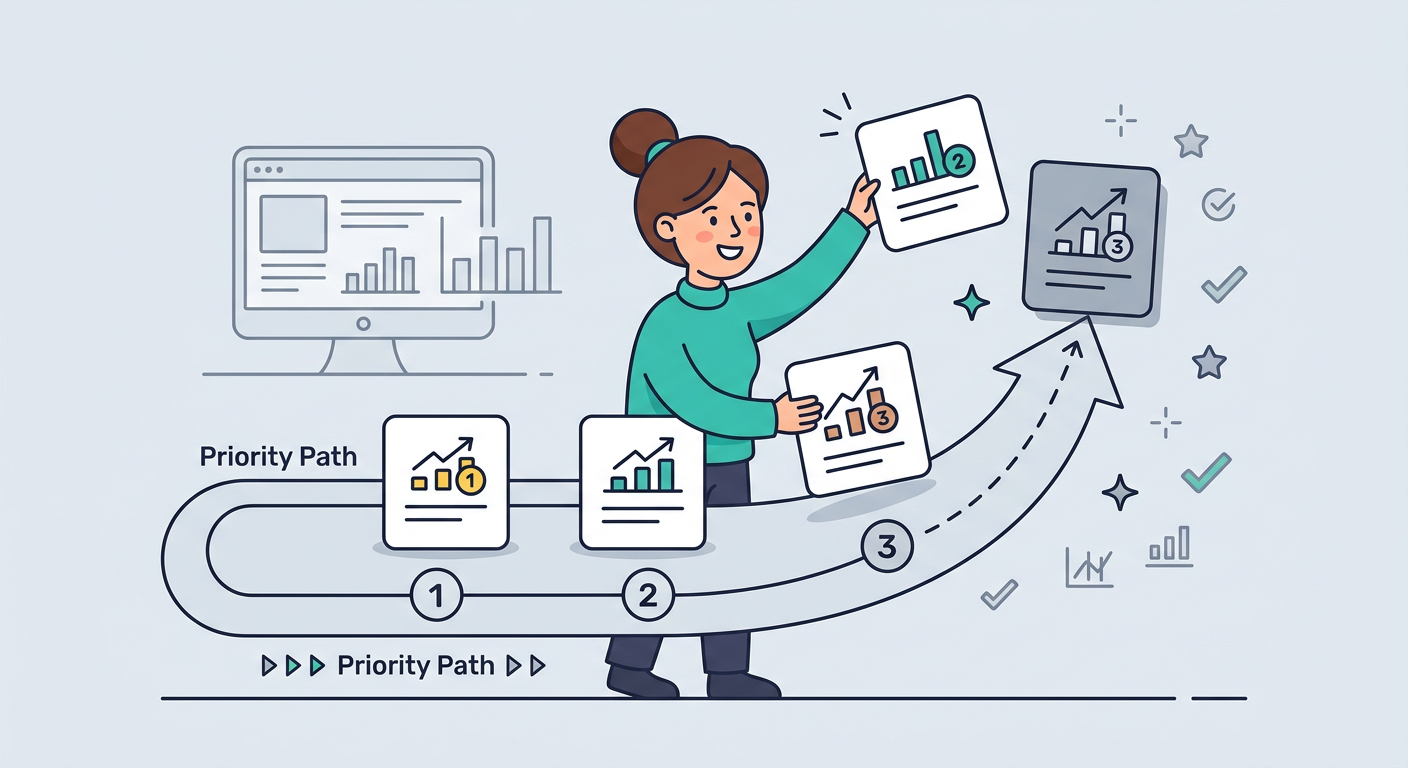
Every week, review only three signals: the pages that gained visibility, pages that dropped materially, and pages hovering between positions 8 and 20. Those near-page-one pages are often the highest-leverage work. Improve the opening answer, add specific proof, clarify the offer, answer missing questions, strengthen internal links, and check whether the page is better aligned with the query than competing pages.
A keyword tracker should support that discipline. It should never become an excuse to watch positions change without changing the page.
Cost, Data Frequency, and Reporting Tradeoffs
Price is more than the monthly subscription. We also need to account for tracked-keyword limits, update frequency, additional users, locations, competitor slots, reporting add-ons, and the time required to interpret the tool.
Daily rank updates are useful for local campaigns, active ecommerce catalogs, agencies, and sites undergoing frequent changes. Weekly updates are often sufficient for a small professional-services site publishing one or two strong pieces per month. Paying for daily checks across thousands of low-value keywords rarely improves results.
We should also resist reporting on rankings alone. A short monthly report should show what moved, why we think it moved, what business metric changed, and the next action. For help organizing target pages before scaling tracking, use a page-to-keyword sitemap workflow to give each important URL a clear job.
Common Mistakes When Comparing Rank Trackers
Most tracking problems come from setup, not software. Avoid these mistakes before changing platforms.
- Tracking broad keywords that do not match the business model or buyer intent.
- Ignoring device, location, and language settings.
- Measuring terms with no mapped landing page.
- Treating a one-position move as a major event.
- Forgetting to compare rankings with organic clicks and conversions.
- Tracking competitors without studying what their ranking pages actually do better.
- Buying an enterprise plan before building a repeatable content and optimization process.
Questions Website Owners Ask Before Choosing a Tool
Do we need daily rank tracking?
No, not always. Daily updates make sense for competitive local markets, active stores, agencies, and major site changes, but weekly monitoring is often enough for a small site with a steady publishing schedule.
Can Google Search Console replace rank tracking software?
It can cover the basics, but it does not replace a dedicated tracker for precise location settings, competitor comparisons, scheduled reporting, or consistent monitoring of a defined keyword set. Use Search Console as the source of actual search performance and a tracker for structured visibility monitoring.
How many keywords should a small business track?
Start with 20 to 40 high-priority phrases. Add terms only when we have a clear landing page, a business reason to rank, and capacity to act on the result.
Why do rankings differ between tools?
Rankings vary by location, device, language, personalization, timing, and the results a platform includes in its measurement. Compare trends inside one consistently configured tool instead of expecting two products to display identical positions.
Is local rank tracking different from standard tracking?
Yes. Local tracking should account for city-level results, map visibility, and proximity-based variation. A business can rank well across a metro area but appear much lower a few miles away.
Should we track AI mentions along with Google rankings?
Yes, once the site has clear core pages and useful supporting content. Traditional rankings show Google visibility, while AI mention tracking can show whether assistants recognize and recommend our brand for relevant buyer prompts.
Build a Tracking System We Will Actually Use
The right rank tracker is the one that makes priorities obvious. For early-stage website owners, that means starting with a limited keyword set, mapping every term to a page, checking real clicks and conversions, and improving the pages closest to meaningful visibility.
We do not need a thousand-keyword dashboard to grow. We need a reliable feedback loop: publish useful pages, measure their visibility, improve what is close, and repeat. The platforms above can all support that work when matched to the right budget and operating rhythm.
Turn Rankings Into a Clear Weekly Action Plan
If we want a simpler way to connect keyword positions, page improvements, competitor research, and AI visibility, try Marvlus. Start with a free AI website audit, map priority keywords to the pages that should rank, and use the results to focus the next week’s SEO work where it can matter most.